
A Florida eviction notice is a legal document used by landlords to notify tenants that they must correct a lease violation or vacate the property within a specified time frame.
These notices are commonly used for situations such as unpaid rent, lease violations, or ending a tenancy. Understanding how eviction notices work in Florida is important for both landlords and tenants.
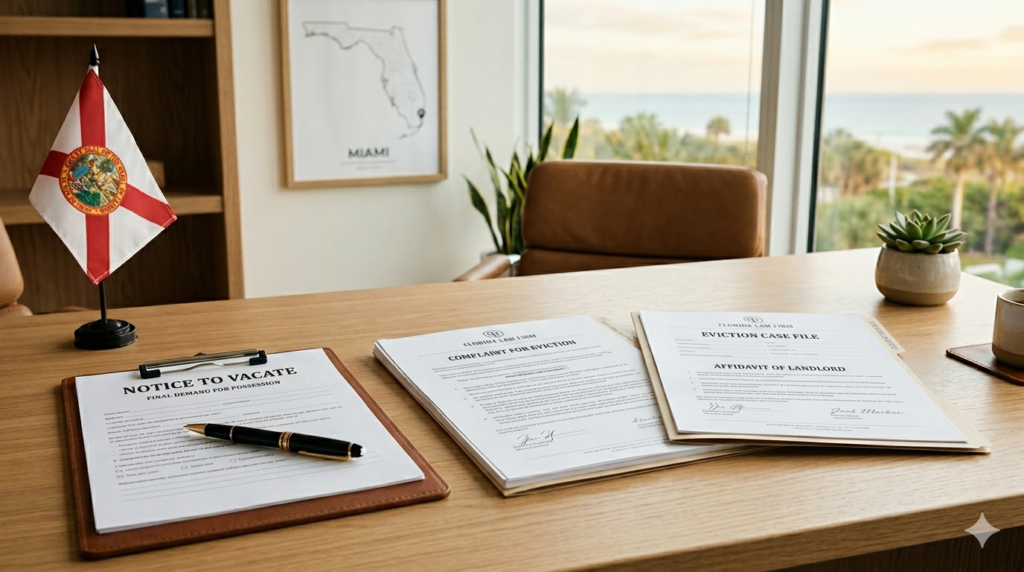
Need a Florida Eviction Notice?
We can help you find the correct form based on your situation.
What Is an Eviction Notice?
A Florida eviction notice, often called a notice to pay or vacate or notice to cure or quit, is the first step in the eviction process.
It informs the tenant that they must either fix a violation (such as paying overdue rent) or leave the property within the required notice period.
If the tenant does not comply, the landlord may proceed with filing an eviction case in court.
Types of Florida Eviction Notices
Different situations require different types of eviction notices in Florida.
🔸 3-Day Notice to Pay or Vacate
Used when a tenant fails to pay rent. The tenant is given three days (excluding weekends and holidays) to pay or move out.
🔸 7-Day Notice to Cure or Quit
Used for lease violations that can be corrected, such as unauthorized pets or occupants.
🔸 7-Day Unconditional Notice to Vacate
Used for serious or repeated violations where the tenant is not given an opportunity to fix the issue.
🔸 15-Day Notice to Terminate Month-to-Month Tenancy
Used to end a month-to-month rental agreement.
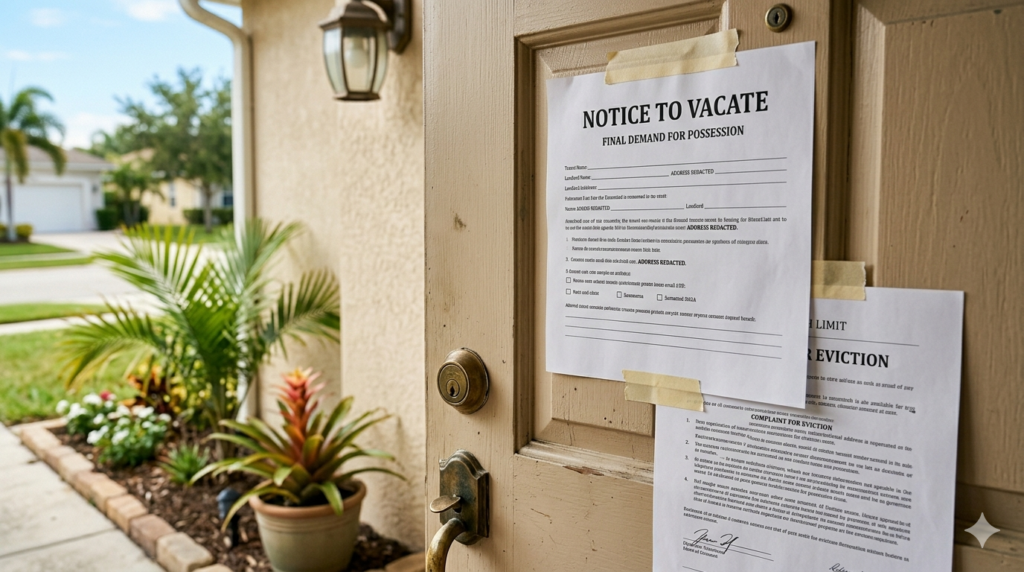
When Do You Need an Eviction Notice?
You may need a Florida eviction notice if:
- A tenant has not paid rent
- Lease terms have been violated
- You want to terminate a rental agreement
- You need to regain possession of your property
Using the correct notice ensures compliance with Florida laws.
Florida Eviction Process (Overview)
The eviction process in Florida generally includes:
- Serve the eviction notice to the tenant
- Wait for the required notice period
- File an eviction lawsuit if necessary
- Attend the court hearing
- Obtain a judgment and remove the tenant
Following proper procedures is essential to avoid delays.
Does an Eviction Notice Need to Be Notarized?
A Florida eviction notice does not typically require notarization, but it must be delivered according to Florida law.
Common delivery methods include:
- Personal delivery
- Posting on the property
- Mailing the notice
Frequently Asked Questions
❓ How many days notice is required in Florida?
It depends on the situation:
- 3 days for non-payment of rent
- 7 days for lease violations
- 15 days for month-to-month termination
❓ Can a tenant stop an eviction by paying rent?
In some cases, paying overdue rent within the notice period may resolve the issue.
❓ What happens if a tenant ignores the notice?
The landlord may proceed with filing an eviction lawsuit in court.
Get Help With a Florida Eviction Notice
Using the correct eviction notice is essential to avoid legal issues and delays.
Silver Forms helps you identify and request the appropriate Florida eviction notice based on your situation.