
A California Power of Attorney is a legal document that allows one person (the principal) to authorize another individual (the agent or attorney-in-fact) to make decisions on their behalf. These decisions may involve financial matters, legal actions, or healthcare choices depending on the type of power of attorney created.
This document is commonly used when someone needs assistance managing personal or financial affairs or when they want another trusted person to act on their behalf in certain situations.
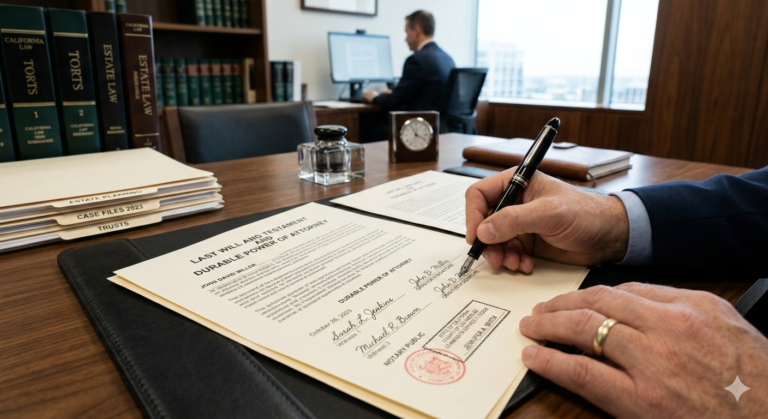
How a Power of Attorney Works
In a power of attorney arrangement, the principal grants authority to an agent to perform specific tasks or make decisions. The scope of authority can be broad or limited depending on the terms included in the document.
For example, an agent may be authorized to:
Manage financial accounts
Handle property transactions
Sign legal documents
Manage business matters
The authority granted is defined in the power of attorney document.
Common Types of Power of Attorney in California
Several types of power of attorney documents may be used depending on the situation.
General Power of Attorney
A general power of attorney provides broad authority for the agent to manage financial or legal matters on behalf of the principal.
Limited Power of Attorney
A limited power of attorney grants authority for a specific task or limited time period, such as signing documents for a real estate transaction.
Durable Power of Attorney
A durable power of attorney remains effective even if the principal becomes incapacitated. This type of document is commonly used for long-term financial planning.
Medical Power of Attorney
A medical power of attorney allows an agent to make healthcare decisions for the principal if they are unable to make those decisions themselves.
When a California Power of Attorney May Be Used
A power of attorney may be used in many situations, including:
Managing financial matters while traveling
Handling real estate or property transactions
Planning for medical or financial emergencies
Allowing a trusted person to assist with legal decisions
Because this document grants authority to another person, it is important that the principal fully understands the responsibilities involved.

Related California Legal Forms
If you are exploring legal documents in California, you may also want to learn about other commonly used forms.
These include:
You can explore additional documents on the California Legal Forms page.
Frequently Asked Questions
What is the purpose of a power of attorney?
A power of attorney allows one person to authorize another individual to act on their behalf in legal, financial, or medical matters.
Does a power of attorney need to be notarized in California?
Certain power of attorney documents may require notarization depending on their purpose and how they will be used.
Can a power of attorney be revoked?
Yes, a principal can revoke a power of attorney at any time as long as they are legally capable of making that decision.
Need Help Locating the Right Legal Form?
Silver Forms provides information about commonly used legal documents and helps individuals identify forms that may be relevant for their situation.
You can explore additional forms and resources on the Silver Forms website or click the button below.